Tag Archives: allied health care

Starting the Conversation: Navigating the Aged Care Conversation

pexels kampus 8829184

pexels kampus 8829184

It is one of the most profoundly challenging milestones an adult child will ever face. Initiating a conversation about aged care options with aging parents frequently brings up a complex wave of emotions—ranging from fear of vulnerability and role reversal to a deep sense of unexpressed guilt. For many, it feels like an admission of decline or an intrusion upon a parent’s hard-earned autonomy.

However, shifting your perspective can transform this daunting hurdle into a meaningful act of support. Talking about future care options isn’t about stripping your parents off their independence; it is about partnering with them to protect it. By discussing their preferences long before a crisis occurs, you ensure their voice remains the loudest in the room, honoring their choices and securing their long-term dignity.

Why We Wait (And the Real Cost of Delaying)

It is entirely natural to pull away from this topic. No one wants to imagine the people who spent a lifetime protecting them becoming fragile. The quiet heartache of confronting a parent’s mortality, paired with the intense desire to keep the peace, often causes us to push the conversation far over the horizon, soothing ourselves with: “We’ll cross that bridge when we get there.

But when a sudden fall or medical emergency forces the issue, that bridge vanishes. Instead of a calm transition, families are thrust into raw panic—making rushed, high-stakes decisions from a hospital corridor under immense pressure. The real heartbreak of waiting is that in the rush, your parents’ true choices can get lost. Starting early isn’t about rushing the future; it is a profound act of love that ensures their voice remains the loudest and most respected in the room.

Preparing Yourself Before You Speak

A successful conversation relies heavily on the preparation you do beforehand. Entering the room with a calm, informed, and collaborative mindset will set the foundation for a reassuring discussion.

  • Understand the Landscape: Familiarise yourself with the basic avenues of support available. Learn the difference between structured Home Care Packages (which deliver support directly into their familiar environment) and residential care options. Knowing that support exists to help them stay at home safely can greatly ease their anxieties.
  • Check Your Mindset: Enter the conversation as an ally, not a manager. Your role is to support their transition and learn their wishes, not to dictate a plan or take control of their life.
  • Choose the Moment Wisely: Timing is vital. Avoid bringing up the topic during stressful family milestones, major holidays, or periods when your parents are visibly exhausted. Opt for a quiet, relaxed day when everyone is unhurried and clear-headed.

Practical Strategies for a Gentle Conversation

How you frame your sentence makes all the difference in preventing your parents from feeling defensive or cornered. Here are clear strategies to guide your approach:

Prioritise “I” Statements Over “You” Statements

Sentences beginning with “You need to…” or “You should…” can immediately feel restrictive and accusatory. Instead, anchor your sentences in your own care and observations.

Instead of: “You can’t manage this big house anymore and you need to get help.”

Try: “I want to make sure we are supporting you in keeping things running smoothly, so you

can enjoy your time without the stress of heavy upkeep.”

Ask Open-Ended Questions

Maintain your parents’ autonomy by asking questions that invite them to steer the plan. This reinforces that they are the primary decision-makers in their own lives.

  • “How are you finding the maintenance of the garden lately?”
  • “What are your thoughts on your living arrangements over the next few years?”
  • “What matters most to you if you ever find yourself needing a little extra support around the house?”

Utilise a Third-Party Icebreaker

If a direct approach feels too abrupt, gently bring the topic by referencing an external scenario. This removes immediate personal pressure while opening the door for reflection.

Example: “My colleague at work has been helping her dad look into some home support options recently, and it made me realise I’ve never asked you what your preferences would be if you ever wanted a bit of help with things like cooking or transport.”

pexels cottonbro 6943492

Handling Resistance with Empathy

Expect some pushback. Initial reactions of denial, frustration, or abrupt silence are completely normal human responses to a perceived loss of freedom. If your parents become defensive, avoid arguing or attempting to prove a point with facts and figures.

Validate their feelings completely. Acknowledge their fears by saying something as simple as, I understand you value your independence, and that is exactly why I want to talk about this—so we can protect it.

Remember the golden rule of long-term planning: this is a series of short, gentle chats, not a single, binding presentation. If the atmosphere becomes tense, comfortably back off, change the subject, and gracefully revisit the topic a few weeks down the track.

Establishing a Gentle Action Plan

As your conversations progress, aim to conclude with one small, manageable, and stress-free next step that you can take together. This keeps the momentum positive without overwhelming them.

This could look like setting aside an hour next month to look at local transport or home cleaning services together, booking a routine, proactive health check-up, or simply agreeing to keep the conversation open.

Documenting their preferences as they share them ensures everyone in the family stays aligned and respectful of their true wishes.

Moving Forward Together

Initiating a dialogue about future care is ultimately a profound act of love and respect. By stepping into this space early with an open heart, clear questions, and deep empathy, you gift your parents the confidence that their choices will be protected, ensuring peace of mind for the entire family as you step into the future side by side.…

The Hardest Pivot: When staying at home is no longer the best choice

2

2

Whilst our main aim at Empower Healthcare is to keep your loved ones safe and happy in their home for as long as possible, sometimes the reality forces us to ask: is it time to move into permanent care?

There is an unwritten promise many of us make to our parents long before they ever actually need us. “I will always take care of you. I will never put you in a home“. We mean it with every fiber of our being.

The reality of aging is that medical and physical needs can scale beyond what a family home can safely accommodate. Recognising this isn’t a failure on your part—it’s an act of clarity.

Why We Fight So Hard to Keep Them at Home

The resistance to professional care facilities isn’t just about logistics; it’s deeply emotional. For most families, hesitation comes from an incredibly pure place.

  • The Weight of a Promise: We feel a profound sense of duty to return the care they gave us when we were growing up. But here is the hard truth: You made that promise to a person who was healthy, based on a version of the future that didn’t include a progressive neurological disease.
  • Cultural and Social Pressure: There is often an unspoken expectation from family or community that we should handle everything under our own roof no matter what the cost.
  • The Fear of the Unknown: We worry they will feel abandoned, lonely, or that a facility won’t understand their unique quirks, routines, and favorite things.

So, we stretch ourselves thin. We become full-time care coordinators, nurses, and chefs, all while juggling our own careers, children, and lives. We tell ourselves, “We can handle this.”

But sometimes, handling isn’t what’s best for them. Being a daughter or son again—instead of a burnt-out nurse— is the greatest gift we can give them.


The “Waiting for a Crisis” Trap

Proactive planning vs. reactive panic.

Most people wait for a “sign” to start looking at aged care. A fall, a hospital admission, a middle-of-the-night emergency. By then, the power of choice is gone.

When you’re in a hospital-led discharge, you aren’t choosing a facility based on lifestyle or culture—you’re choosing based on who has an available bed at 4:00 PM on a Friday.

Urgency creates bad math. You end up making rushed financial decisions that can cost hundreds of thousands in unnecessary fees or lost subsidies.

Planning early isn’t “giving up” on a parent. It’s securing the right to say “no” to the wrong options.

When Keeping Them at Home Becomes the Riskier Choice

  • Safety Becomes a Compromise: Frequent falls, missed medications, or wandering (especially with dementia) mean the home environment is no longer secure, even with modifications.
  • Medical Needs Demands Professional Intervention: When complex health conditions require around-the-clock monitoring or specialized therapy that a family member simply cannot provide.
  • The “Caregiver Burnout” Paradox: When you are entirely consumed by the physical tasks of caregiving, toileting, lifting, cleaning—you lose the ability to just be their son or daughter. Your relationship becomes defined by stress rather than connection.

Re-framing the Decision: It’s Not Giving Up, It’s Giving Care

If you are standing at this crossroads, it is time to change the narrative you are telling yourself.

Moving a parent into professional care is not walking away. In fact, it is often the most selfless choice you can make. It means putting their safety, their medical well-being, and their dignity ahead of your own desire to keep a promise that is no longer safe to hold onto.

When a parent is in an environment with structured support, specialized clinicians, and around-the-clock safety, something incredible happens: You get to be their child again.

Instead of spending your visits managing medication schedules or lifting them safely into bed, you can spend your time sitting together, looking through old photos, sharing a meal, and talking. You step out of the role of an exhausted caregiver and back into the role of someone who loves them.

If you are feeling the weight of this choice today, give yourself some grace. It is okay to feel heartbroken. It is okay to wish things are different. But remember, choosing professional care doesn’t mean you love them less. Sometimes, it means you love them enough to step aside and ensure they get the exact support, safety, and care they truly deserve.

If you are wondering how to begin this delicate dialogue without causing distress, our guide, Starting the Conversation: Navigating the Aged Care Conversation, is here to help. It breaks down how to approach the topic gently, manage differing family dynamics, and move forward together with compassion.…

Why Nursing Documentation Is Critical for Safe Participant Care

Nursing documentation

Nursing documentation

Nursing documentation is a critical component of safe healthcare delivery. Accurate records ensure participants receive appropriate treatment, enable healthcare professionals to coordinate care effectively, and support nurses to practise within legal and regulatory requirements.  

This is particularly important for participants receiving community or home-based nursing services, where nurses rely on current medical information to safely deliver care.  

Under the Drugs, Poisons and Controlled Substances Act 1981, nurses must have appropriate medical authority before administering medications or performing procedures such as catheterisation. 

 This means nurses require: 

  • GP summary OR 
  • Hospital discharge summary  

What Is a GP Authority and Health Summary? 

A GP authority is documentation provided by a medical practitioner that authorises clinical care, including medication administration. 

A health summary typically includes: 

  • Current medication list 
  • Medical diagnoses  
  • Allergies and sensitivities 
  • Relevant treatment plans 
  • Prescribing doctor details 

 This information ensures nurses have a clear understanding of the participant’s medical needs before delivering care. 

If this documentation is not available, nursing services may be delayed until the required medical information is obtained. 

How Documentation Protects Participants 

Proper documentation plays a key role in participant safety by: 

  • Ensuring correct medication are administered 
  • Ensuring correct treatment plans are followed 
  • Providing up-to-date clinical information 
  • Supporting communication between healthcare providers 

The Risks of Missing Documentation 

If proper documentation is not available, the following issues may occur: 

  • Delays in treatment 
  • Inability to administer medications 
  • Inability to perform procedures such as catheterisation 
  • Increased clinical risk for participants 

For this reason, healthcare providers often require documentation to be obtained before services can proceed. 

Nursing documentation is far more than administrative paperwork. It is a vital safeguard that protects participants, supports nurses, and ensures healthcare services operate within legal requirements. 

Referral form 600x400

The role of Nurses in medication management

Medication Management Blog

250 000 Australians are hospitilised each year due to problems relating to medicine use, and many more are not experiencing the full benefits of the medicines prescribed to them due to mistakes made in how they take their medication – Nurses can assist with medication management.

When used correctly, medicines can prevent serious illness and improve health and wellbeing, but the positive and powerful effects of medications can also carry risks when not used properly.

Home Care Nurses play a key role in assisting people to manage and obtain the maximum benefit from their medicines, safely and conveniently, in their own homes. With their extensive pharmacological and clinical knowledge, nurses can provide the right amount of support to suit each person’s unique circumstances. They do this by providing the following care and services:

Assessment
Nurses supporting people with medication management conduct thorough assessments to determine the needs of their clients.

Education
Nurses play a vital role in educating people about the medicines they are taking, the dosages and timing of administration.

Monitoring
The aim of good medicine management at home is to maintain independence through the self-administration of medicines where possible. Nurses can help by monitoring the use of medicines and determining if there are any issues with administration.

Intervention
Home Care nurses can help people and care givers with practical ways of scheduling, planning and administering medication as independently as possible.

Communication and referral
When issues arise related to medication, nurses can reach out to dispensing pharmacists, GP’s and specialists in order to optimise medicine use.

Good medication management means creating as much independence and self-management as possible with the support needed to ensure that clients receive better, safer and more convenient care where they want to be – at home.


About Empower

We Change Lives

Empower Healthcare is a national allied-health service provider and partner with Home Care package providers, NDIS plan managers & Aged Care organisations to deliver life changing allied health services. We offer a full-service platform from physiotherapy, occupational therapy, podiatry, dietetics to osteopathy, massage therapy and most recently, home nursing services and pride ourselves in the delivery of high-quality therapy solutions, value packed services and responsive ethos.

It is a very exciting time with Empower Healthcare building on the success of its Victorian operation and now expanding nationally into NSW & WA. With a growing team of 100+ clinicians, we provide over 1,500 treatments every day and service more than 100 healthcare organisations. Building on this strong foundation, we are well positioned and committed to delivering exceptional care.

Our therapists genuinely care about the people we work with and take the time to build strong relationships that holistically improve social, physical and mental wellbeing to live happier and healthier lives.

How To Get Clients Started With Our Home Care & NDIS Services

Simply click on the image below for our referral form.
Referral on-boarding now completed online in minutes

 …

How Osteopath Callan Reid Helps Clients Achieve Their Health Goals

Callan Reid 6 scaled

Callan Reid Osteopath

Osteopath Callan has helped a diverse range of people across private practice, home care and recently residential aged care. He actively listens to and works collaboratively with consumers to develop targeted treatment plans to overcome pain and injury, supporting them to reach their healthcare goals.

I draw on the guiding principles of Osteopathy – that the body is a whole in which structure and function are interrelated, and under optimal conditions the body possesses inherent self-healing capacity.

Callan believes it is the job of the therapist to provide a path for that person so they might enjoy a state of health. As an Osteopath, Callan can help consumers achieve their health goals through use of:

  • Gentle or deep soft tissue techniques
  • Joint mobilisations
  • Strength and mobility exercise prescription
  • Falls prevention and balance training
  • Habitual and lifestyle changes
  • Pain management and complex care
  • Collaborative care with other allied health professionals.

He graduated with an Advanced Diploma in Remedial Massage (Myotherapy) in 2007 and practiced eight years in a variety of clinical settings. Callan decided to further develop both his diagnostic and manual skills, graduating from Victoria university with a Masters of Health Sciences (Osteopathy) and a Bachelor of Clinical Sciences (Osteopathy) in 2017.

In addition to working as an Osteopath, Callan is also a clinical educator helping to train the next generation of Myotherapists. In his free time, Callan is a student of functional/mindful movement who enjoys rock climbing, calisthenics, and handstand training. A nature lover, he enjoys camping, hiking and spending time with his dog, Spectre.

Empower has a team of incredibly talented Osteopaths ready to help your clients get moving, feel better and get back to what they love doing most!

Click Here to learn more about Osteopathy

The Empower Difference

Changing Lives Through Exceptional Care

We pride ourselves in the delivery of innovative, high-quality, allied health solutions that constantly evolve to exceed the needs of your clients and their communities. Our service model integrates five service commitments that empower you to help your clients improve their sense of self-identity, quality of life, and ability to live safely in their environment.

  1. Extensive service offerings
  2. Care provided by highly skilled clinicians
  3. A team approach to delivering continuity of care
  4. User friendly referral process
  5. Superior reports providing clarity on future care needs.

Click on your relevant health care industry sector below to learn more.

How To Get Clients Started With Our Home Care & NDIS Services

Simply click on the image below for our referral form.

Referral on-boarding now completed online in minutes


 …

When to Consider Using an Osteopath for Your Client

Mailchimp What is Osteopathy

When to consider using an Osteopath For your Client

“Osteopathy is about listening to the person, listening to the body and using a gentle, holistic approach to activate healing processes in the body and enable recovery.”- Denis Yardin, Empower Home Care and NDIS Osteopath.

An osteopath is an Allied Health professional who specialises in the assessment and treatment of structural and functional integrity of the human body, focussing on musculoskeletal system- the bones, muscles, nerves, blood and lymph circulation and other tissues that support the body and control its movements and function. Osteopaths aim to trigger healing processes in the body by treating movement restrictions, promote balance between different systems of the body and activate physiological processes required to achieve recovery.

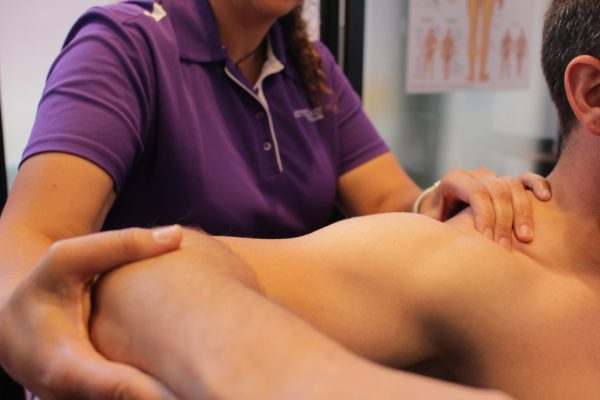
Osteopaths working in Home Care assess each client holistically in their own environment and analyse how the body and its systems function when the person move or at full rest. They physically examine using their hands to determine which areas of the body are healthy and which are not so healthy that may be causing pain or disfunction.

Osteopaths believe that the body heals best if the right combination of manual techniques and treatment such as massage and the mobilisation of muscles, joints, ligaments, tendons and other soft tissues are used to treat areas of weakness, tenderness, restriction, or strain in the body. Techniques are chosen based on the needs of the individual client and the symptoms they have reported as well as their functional goals.

These include but not limited to:

  • Therapeutic Massage and soft tissue techniques- to release and relax the muscles and other soft tissues
  • Mobilisation of stiff joints – to restore range of movement.
  • Articulation- where joints are moved through their natural range of motion.
  • Clinical exercise programs

These aim to reduce pain, improve movement, encourage blood flow and activate healing processes.

When to book at Osteopathy consultation

There are many reasons to see an osteopath when pain or movement problems effect quality of life, independence or function. Some typical conditions that benefit from osteopathy include:

  • Any joint, muscle and body pain.
  • Restricted movement in any part of the body.
  • Non-traumatic musculoskeletal injuries.
  • Reduced function due to stiffness, aches and pain
  • Headaches.
  • Chronic neck and back pain.
  • Poor posture, body alignment or weakness.

Osteopaths are also very successful with frail clients who may have multiple conditions as they are able to utilise a variety of gentle or indirect techniques.

Empower has a team of incredibly talented Osteopaths ready to help your clients get moving, feel better and get back to what they love doing most!  Denis explains why he loves working in community allied health care.

“Working in Home Care gives me the opportunity to understand what my clients’ need to live the best, most active lives possible and help them achieve their goals by facilitating recovery to optimal health.”


Click Here to learn more about Osteopathy


The Empower Difference

Changing Lives Through Exceptional Care

We pride ourselves in the delivery of innovative, high-quality, allied health solutions that constantly evolve to exceed the needs of your clients and their communities. Our service model integrates five service commitments that empower you to help your clients improve their sense of self-identity, quality of life, and ability to live safely in their environment.

  1. Extensive service offerings
  2. Care provided by highly skilled clinicians
  3. A team approach to delivering continuity of care
  4. User friendly referral process
  5. Superior reports providing clarity on future care needs.

Click on your relevant health care industry sector below to learn more.

How To Get Clients Started With Our Home Care & NDIS Services

Simply click on the image below for our referral form.

Referral on-boarding now completed online in minutes


 …

The 5 types of clients who would benefit from a home nursing assessment and why

Copy of Untitled 8

Home health care nursing services can be vital for the wellbeing of clients living at home and wanting to continue to do so. A home nursing assessment is a convenient and easy way to establish the support and medical needs for people who find attending out-patient services difficult, while providing the clinician with valuable information regarding the holistic care needs of clients seen within their unique home environments.


Clients who benefit from home nursing assessments include:

  • New clients on home care packages,
  • People with deteriorating health,
  • Individuals managing chronic health conditions,
  • Clients with complex care needs,
  • Anyone who has recently returned home after a hospital admission and is struggling.


Why is a nursing assessment important?

  • To assess all aspects of physical and social wellbeing.
  • To identify areas in which individuals require additional support.
  • Establishing whether clients are safe and able to cope at home.
  • To assist in planning and implementing of appropriate care.
  • Nursing assessments allow clients to participate in their own care by engaging them in the assessment process.


Booking a home care nursing assessment can be an important step in giving people living at home the freedom to live the lives they choose to live.

About Empower

We Change Lives

Empower Healthcare is a national allied-health service provider and partner with Home Care package providers, NDIS plan managers & Aged Care organisations to deliver life changing allied health services. We offer a full-service platform from physiotherapy, occupational therapy, podiatry, dietetics to osteopathy, massage therapy and most recently, home nursing services and pride ourselves in the delivery of high-quality therapy solutions, value packed services and responsive ethos.

It is a very exciting time with Empower Healthcare building on the success of its Victorian operation and now expanding nationally into NSW & WA. With a growing team of 100+ clinicians, we provide over 1,500 treatments every day and service more than 100 healthcare organisations. Building on this strong foundation, we are well positioned and committed to delivering exceptional care.

Our therapists genuinely care about the people we work with and take the time to build strong relationships that holistically improve social, physical and mental wellbeing to live happier and healthier lives.

How To Get Clients Started With Our Home Care & NDIS Services

Simply click on the image below for our referral form.

Referral on-boarding now completed online in minutes

 …

Why the Otago Exercise Programme may be right for your client

OT Promoting Independence 4

Physiotherapists working in community settings can improve the independence, safety and quality of life of older people living at home by implementing evidence-based exercise programmes as part of comprehensive home care.


Why the Otago Exercise Programme?

  • Proven 35% reduction in falls and injuries resulting from falls.
  • It is equally effective in men and women.
  • The programme improves participants’ strength and balance.
  • Maintains confidence in carrying out everyday activities without falling.
  • The programme is cost effective and easy to implement at home.


Who benefits from the programme?

Older adults who:

  • Have a history of a fall.
  • Rely on walking for independence.
  • Fear falling and lack the confidence to enjoy activities inside and outside the home.
  • Have experienced a decrease in function following illness or injury.
  • Notice reduced strength and balance when performing activities of daily living.


By using this programme, physiotherapists can adapt exercises to meet the unique goals of individuals with complex medical needs at most stages of reablement and walking mobility while using a proven and effective approach to exercise therapy.


“I love using the Otago Exercise Programme with my clients. It’s effective and easy to adapt to the diverse environments I work in. My clients experience increased confidence that comes from improved balance and strength and allows them to participate in their community and remain independent for as long as possible.”

Briony Watt, Physiotherapist


About Empower

We Change Lives

Empower Healthcare is a national allied-health service provider and partner with Home Care package providers, NDIS plan managers & Aged Care organisations to deliver life changing allied health services. We offer a full-service platform from physiotherapy, occupational therapy, podiatry, dietetics to osteopathy, massage therapy and most recently, home nursing services and pride ourselves in the delivery of high-quality therapy solutions, value packed services and responsive ethos.

It is a very exciting time with Empower Healthcare building on the success of its Victorian operation and now expanding nationally into NSW & WA. With a growing team of 100+ clinicians, we provide over 1,500 treatments every day and service more than 100 healthcare organisations. Building on this strong foundation, we are well positioned and committed to delivering exceptional care.

Our therapists genuinely care about the people we work with and take the time to build strong relationships that holistically improve social, physical and mental wellbeing to live happier and healthier lives.

How To Get Clients Started With Our Home Care & NDIS Services

Simply click on the image below for our referral form.

Referral on-boarding now completed online in minutes

 …