Dietitian Meg eats, sleeps, and dreams healthy eating
Meg qualified as a Dietitian in Queensland and moved to Melbourne to pursue her passion for food. She spends her spare time visiting markets, trying new cuisines and exploring the incredible food offering. Meg eats, sleeps, and dreams healthy eating and having suffered her own gut health problems for ten years she has a special interest in gut health.
Gut health issues require specialised recipes to suit the gut health requirements but more specifically focusing on how to change a diet whilst maintaining a healthy variety of nutrients. Meg enjoys helping people alter their favourite recipes and meals to suit their own gut health requirements whilst still enjoying their favourite foods.
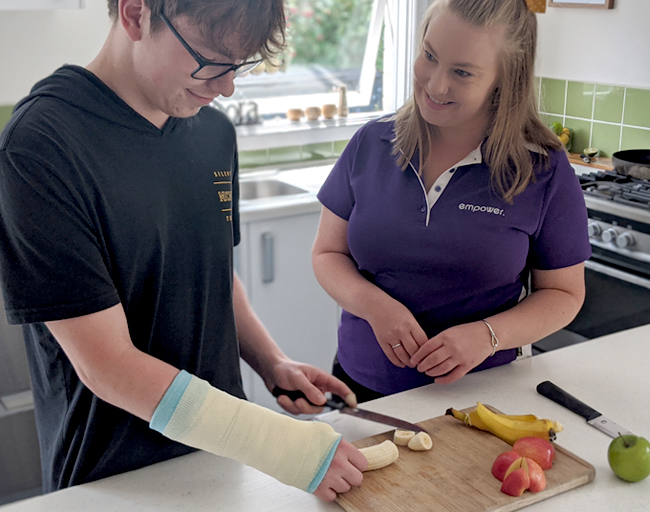
Working as a Community Dietitian offers variety because each client is different. They have their own unique goals, challenges and lifestyles, and the solutions are not a one-size fits all approach. Meg and all Empower dietitians take the time to sit and listen to clients about their needs and wants when it comes to nutritional support, offering a unique person-centred approach.
Meg says
Working in the community provides a rare opportunity to see someone’s living conditions whilst taking their diet history. This helps tailor any recommendations to ensure they are suited to their current living environment.
Empower Dietitians improve the independence and quality of life of our clients by providing reliable and trusted food and nutritional support to live their lives the way they want.
Let Us Help You with Your Dietetics Needs
As a registered NDIS provider with experience in the assessment & treatment of a variety of conditions and strong partnerships with leading equipment and home modification providers, we can facilitate all your allied health needs provisioned under the NDIS.
We assist NDIS participants from 15 onwards.
Our convenient, NDIS services range from provide clients with high quality occupational therapy, physiotherapy, podiatry, and dietetics, and in the comfort of their own environment including timely and effective communication to support the administration of your clients’ funds.
We want your participants to experience the best allied health services, and stay independent, happy, healthy in their own home.
Our NDIS Dietitians Help With Wellbeing
Our team of experienced NDIS dietitians provide diet advice to improve health and manage specific conditions with weight loss or gain, difficulty in eating food and managing food allergies.
Here’s how our NDIS dietitians help with wellbeing:
Improve overall health and mental happiness
Education around good food choices
Introduce tasty and nutritious meal ideas for fussy eaters
Reduce mealtime stress and create positive experiences
Improve gut health, manage appetite and weight problems
Our NDIS dietitian offers everything a mainstream dietitian does, plus a whole lot more, such as:
Supporting diets for people who experience difficulties with chewing and swallowing
Fussy eating or resistant/picky eating
Excessive weight gain which impacts physical or social function
Stressful mealtimes and other mealtime challenges such as food refusal, not coming to the table, eating with distractions or avoidance to eat socially
At Empower, we are always looking for new and innovative ways to meet our client’s needs. With that in mind, we are launching a new Allied Health Assistant service to support our clients while optimising their available funds which allows for increased treatment frequency, extended multidisciplinary support or the use of their funds for other purposes.
What is an Allied Health Assistant (AHA)?
Allied Health Assistants are trained health care workers who work under the supervision of Physiotherapists and other health care professionals to support people who need regular therapy.
What do Allied Health Assistants do?
Allied Health Assistants work under the supervision of health care professionals to develop and implement high quality and effective interventions for clients who need regular and ongoing services. Allied Health Assistants working with Physiotherapists can assist clients with exercise programs, mobility practice and functional task performance.
How does the Empower Healthcare Allied Health Assistant Service work?
Since July, selected Empower Physiotherapists have been working alongside a team of fully qualified and experienced Allied Health Assistants to identify clients who would benefit from goal-based therapy under the direction of an allied health assistant, freeing up fundsfor improved access to extended therapy, equipment and medical needs.
Our Physiotherapists conduct comprehensive assessments and create treatment plans that are best practice and evidence based to be implemented by Allied Health Assistants during regular treatment sessions. All clients are regularly reviewed, and treatment programs adjusted to meet their changing needs.
What is the benefit to clients of adding Allied Health Assistants to our services?
Including the services of Allied Health Assistants for clients who require regular and ongoing therapy, reduces the cost of Physiotherapy services and frees up funds for additional care and therapeutic needs. Clients may be able to receive more frequent treatment or additional services with increased available funds.
You can make the plan go further!
By switching across to an Allied Health Assistant, you can optimise each plan by up to $1,517.23 within a three-month period. Think of the additional health and wellbeing services that become a possibility at improving the independence and quality of life of your clients – helping them to live their lives the way they want to.
Allied Health Assistant Geographic Coverage
WESTERN AUSTRALIA
– Our AHA team services greater metropolitan Perth and surrounds.
VICTORIA
– Our team currently services the north and north-east suburbs, including the northern end of CBD Melbourne.
– It is our intention to expand our Allied Health Assistant team across the greater Metropolitan region. We are seeking your expressions of interest for priority geographic coverage. Contact your relevant Relationship Manager by email to inform them of preferred suburb coverage. (Refer below for State Manager contact details).
How to get started – Process to determine if your client is eligible
Existing clients
Contact your relevant Relationship Manager with an expression of interest for your client to be eligible for ongoing Allied Health Assistant Physiotherapy support.
If Physiotherapy support already exists, then a second initial assessment is not required. All other plans looking to introduce physiotherapy support by an Allied Health Assistant, must first book in a Physiotherapy assessment to determine eligibility.
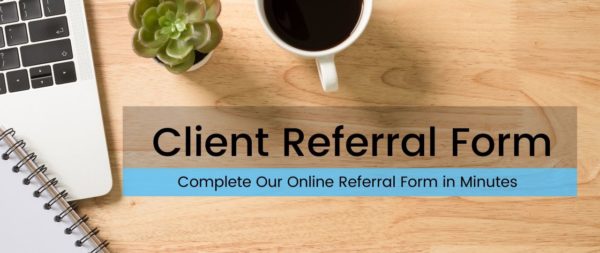
Complete our online referral form and select an initial Physiotherapy assessment. Go to section titled “reason for referral” and state that “you are seeking client eligibility confirmation for Allied Health Assistant support.”
Simply click on the image below for our referral form.
Ever wondered what a day in the life of a home care physiotherapist is like? We go behind the scenes with physiotherapist Patrick Jones, to explore what a typical day looks like for a home care physio and answer a few questions that you may have about becoming one.
Getting Ready:
My typical morning routine for the day is waking up at about 8am or 8:30am (a nice sleep in compared to my wife who has to leave at 7am for the hospital) and getting ready for the day. I officially start at 9am from home (if I don’t have a patient at 9am) and check my schedule for the day while drinking a coffee at home. This includes confirming the client’s names, conditions and address’ I will be seeing as well as answering any emails or printing any paperwork such as HEP.
Going to work:
The joy of community physiotherapy is being able to start at home and the varied environments you travel to from rehabilitation centres, client’s homes, nursing homes or independent living units. Empower ensures to provide clients where possible close to your surrounding area which means not too much driving but enough for a good podcast throughout the day!
Lunch:
During the day you get an allocated lunch break and since you are on the road you get to have a choice of amazing food options. Alternatively, you can also pack lunch and bring it on the road. I find it’s nice either way to stop at a park or beach and enjoy the food which is one of the big perks of working in homecare. Occasionally when we have a meeting you may even be able to score a free lunch.
Treating Clients:
During my typical day I am expected to see six clients, a combination of new referrals and follow up clients. One of the best parts of community is the diversity of conditions and clients we get to see. In a typical day I could see an orthopaedic client recently discharged from rehab, a NDIS participant, a client with Parkinson’s and an elderly client who is at risk of falls. This allows me to continue to grow and develop my skills in a number of physiotherapy clinical areas.
The aspect of home care I find the most rewarding is that we can focus on the client’s goals in their own environment. Unlike hospitals where the aim is to get them to a safe mobility for discharge, in the community we get to help the client return to their most optimised self. This means that we collaborate and partner together to achieve agreed goals.
For example, Linda is a 65 year old female who has had 3 falls in the past which has caused her to be too afraid to leave her house. Her main goal was to be able to leave the house and walk to the local shops. By implementing short term goals with an exercise program focused on balance, lower limb strengthening and mobility, Linda was empowered to build back her confidence. Together we were then able to practice her outdoor walking and preferred route to the shops. Linda is now feeling more self-assured about her walking and with ongoing practice and progress, believes she will be able to soon walk independently.
Team Environment:
Every fortnight the national physiotherapy team meet online. This is a great chance to receive ongoing professional development, bounce ideas off one another as well as meet the rest of the team and participate in fun social activities. As the Sydney team we also meet once a fortnight for coffee and case discussion. This allows us, as a smaller team to debrief on any complex cases over a coffee. Part of your training also includes a trip to the Melbourne head office, if you time it well you might be able to catch a game, Go Giants!
Empower Healthcare’s Graduate Program
We now offer year-round graduate intakes.
As the demand for allied health contribution to our overburdened Australian health system grows exponentially, we are strengthening our capacity nationally to help deliver better health outcomes for Australians and continually looking for new grads to join our team.
Empower Healthcare provides a comprehensive graduate training program across physiotherapy, occupational therapy, osteopathy and podiatry.
If you’re a physio that is seeking to strive and thrive then visit our Graduate careers page and apply today!
MVP winner Tim Cooper, Senior Physiotherapist shares his background and love for aged care physio. Regarded highly by his colleagues as “the loveliest physiotherapist” his kind, gentle and encouraging personality is admired by many of our clients. With an affection for basketball, kayaking and the Foo Fighters, what’s not to love about Tim!
Why did you choose Empower?
I was moving on from 10 years in private practice and looking for employment that was flexible with my schedule of looking after kids, while decreasing some of the stress that a private clinic can bring.
I got an instantly warm vibe from both Matthew (COO) and Adam (CEO), who made the Empower team seem like a big family. I haven’t felt so relaxed in an interview, which I knew was a sign that this was a place I wanted to be.
To top it off, being a tragic Michael Jordan fan growing up, I saw a framed Jordan poster in Matt’s office during my interview and knew I was making the right decision!
What do you love most about your job?
In aged care, you often see clients for longer periods than in a private practice setting. I believe this allows you to form strong bonds with the people you are treating. It’s a fulfilling sensation providing a service to someone who you get to know so well. I have one client who says I remind her of her son and loads me up with chocolate (not any old chocolate either – Ferrero Rocher!) before I leave each session. It doesn’t get much better than that.
What has been your most memorable moment?
Helping someone restore function that has been lost for so long is as satisfying to me as it is to the client. It may not seem like much, however I have a client who hadn’t been able to touch her head (making self care impossible) due to her shoulder pain over a number of years. After a progressive strengthening program she is now able to do all of her self-care independently, whilst also reaching to the top shelf of the fridge!
In what ways has Empower supported your growth personally & professionally?
Empower have been so accommodating in supporting my work-life balance, which can be difficult to find in some workplaces. This has been highlighted recently by allowing me to juggle of seeing clients while managing recent home-schooling duties that accompanied the COVID-19 outbreak.
Empower host regular PD events, help foster team cohesion, in addition to having a supportive management team. All these factors are vital in providing the scaffolding for professional growth. When I started at Empower I had several staff members share hints and tips to make my transition into the workplace easier. Coming from a busy private clinic, this support was most welcome.
In your new role, what will you be looking to achieve in 2020?
In any job, it is important to set personal goals and always work towards something to keep things interesting. I have several goals that I am working towards this year. After working in private practice for so long, my clientele with neurological disorders were rare. As there is a variety of conditions across all aspects of physiotherapy in aged care, my aim is to brush up on a range of specific neuro-physiotherapy treatment techniques.
The joy of physiotherapy comes with helping a client achieve their goals. My main focus for the year is to make as many of their goals a reality. Due to Empower having a multi-disciplinary team at your fingertips, in addition to working closely with case managers, I am looking forward to utilising these services to really make as much of a positive impact for my clients.
What piece of advice would you give your new graduate self?
Don’t be afraid to ask questions of more experienced physios. Clinical experience is where most of your learning will come from, which as a new graduate is obviously in short supply. Building rapport with your team leader to discuss clients and conditions is the most effective way to put all the pieces together.
Out of the workplace, what are your interests and hobbies?
Other than spending quality time with my wife and 2 kids, my other passions involve a lot of sports. I still play basketball, enjoy the football (mad Eagles supporter) and enjoy taking my kayak out in the bay over the summer. I have a fiddle around with my guitar, which normally involves a feeble attempt to play along with the Foo Fighters. I also love podcasts and go through countless episodes from my favourite hosts when travelling between appointments.
During Occupational Therapy (OT) Week, Empower is celebrating its amazing occupational therapists and Amanda Chan reflects on why she joined the profession and the importance of collaborative work and person-centric care.
What is Occupational Therapy?
Working as an Occupational Therapist, I often get this question, “What is occupational therapy?”. The World Federation of Occupational Therapy defines Occupational Therapy as below.
“Occupational Therapy is a client-centered health profession concerned with promoting health and wellbeing through occupation… to enable people to participate in activities of daily life… by working with people and communities to enhance their ability to engage in the occupations they want to, need to, or are expected to do, or by modifying the occupation or the environment to better support their occupational engagement.” WFOT, 2012.
While many other people in the health industry are involved in the diagnosis of diseases, the occupational therapist’s role is about collaboratively setting and achieving meaningful goals.
Amanda explains, “Whether it be helping a person with selecting a chair that can help them stand because they have difficulty standing from their couch or introducing a person to a bath lifter to help them enjoy a bath again, I always feel a sense of satisfaction when seeing the joy on people’s faces as they successfully engage in these simple yet meaningful activities again.
Throughout my training as an Occupational Therapist, we are taught that engaging and participating in meaningful activities provide positive benefits to a person’s feeling of wellbeing.”
Many occupational therapists work with people who have an illness, have a disability or recovering from an injury, and there is a high degree of sensitivity and respect for humanity that is required for this profession.
“Being able to support people of all abilities to engage and participate in what is important to them is my motivation to be the best that I can be. I enjoy working together with the client to create a treatment plan that is meaningful and reflective of their functional and independence goals, be it a leisure activity like knitting, self-care activity such as having a shower safely or a productive activity like preparing their own meals.”
Meaningful Goals and Working Together
“The person who seeks her services is the expert in their lives. They know what is important for them and what is meaningful to them, and from there, they can work together to form goals and work towards those goals together.
At Empower, we recognise the importance of collaborative work. Cooperating and working together with other professionals, families, caregivers and consumers are important with helping consumers achieve their meaningful goals with a holistic approach.”
Therapy activities provided by Occupational Therapists can include;
teaching new techniques to complete the activity
relearning tasks included in completing activities
providing equipment to assist with completing activities or
modifying an environment to enable a person to engage in the activity.
All these can facilitate independence, reduce environmental barriers and provide resources to facilitate a sense of well-being.
Promoting Choice
Health care is becoming more person-centered where consumers are encouraged to make informed choices to better support their needs and well-being.
“With the rollout of the NDIS and the new aged care standards, I can see more relevance in the new health care focus in relation to occupational therapy. There is a shift in health care to promote choice, dignity and respect for consumers.
For example, consumers using NDIS funding have access to services based on goals set by consumers together with the support workers. Looking at the new aged care standards, the new standard of care to be provided to older adult consumers in community and in aged care residential facilities is centralised around maintaining a consumer’s choice, dignity and respect.
This resonates with occupational therapist’s core values where the consumer is the expert of their lives and services provided to them should include their choice in all matters to enable consumers to live life to the best of their abilities. This shift empowers consumers to take charge of their own lives and to be able to make more choices to support their health and well-being.”
Author – Amanda Chan, Occupational Therapist at Empower.
About Empower
We Change Lives
At Empower Healthcare, we deliver life changing allied health services. Our whole team is dedicated to building and delivering exceptional services for clients, loved ones, referrers and partner organisations.
Our therapists genuinely care about the people we work with and take the time to build strong relationships that holistically improve social, physical and mental well-being.
We are a successful privately owned and operated organisation that continues to experience significant growth, driven by our fantastic services and family of professionals.
How can I find an Occupational Therapist?
We have an amazing team of therapists
Comprehensive coverage across Metropolitan Melbourne, Mornington and Geelong
Responsiveness is our allied health home care service guarantee
Services available to residential aged care organisations
Friendly and professional staff
Call our friendly team on PH: 9583 1364.
Learn more on how our Occupational Therapists can help you
In recognition of OT Week, Empower is celebrating its amazing occupational therapists and as part of our Staff Profile series, spoke to Emily McLeod about her role as occupational therapist in our Community Services – Home Care division and her passion for helping clients regain independence.
Why did you choose Empower?
Following working in residential aged care and inpatient rehabilitation in my first year out of uni, I developed a passion for the concept of helping people remain living in their home for as long as possible.
I was working with a lot of patients and residents who may have stayed safe and independent in their homes for longer than what they were experiencing, if they had the right supports around them. I wanted to be one of those supports!
In my early conversations with the team at Empower, they said that they agree with this, and that they are passionate about supporting their clients in the community and expanding their occupational therapy services in this area. Empower works with a range of home care providers, from those who are well cared for, to those who are the most vulnerable in our community. I was instantly attracted to the variety of the work that was coming in, and I could feel the amazing team atmosphere even over Skype interview!
What do you love most about your job?
Easy – the smiles on my clients faces when they receive new equipment or learn new ways to participate in activities that they thought were long behind them. Independence is everything. I love giving that to people.
What has been your most memorable moment?
Leaving university, I had no desire to work with children. I felt it was too difficult and that I didn’t have the knowledge or skills to work with young people with different disabilities. Through our growth into working with the NDIS, I have worked with a number of clients aged between 10-18 years, which I now love.
My most memorable moment was only recently – I visited the home of one of my 14-year-old clients who when I first met him; was glued to his Ipad, reliant on his mum for everything, and had a temper that would spark at the drop of a hat.
I was blown away to see him drop his Ipad when I walked in, show me a new book, tell me of a new club he has joined, get his lunch (that he made by himself) out of the fridge and pack a lunchbox for school, and then watch him help his younger brother get breakfast!
Seeing someone shift in their attitude and personal beliefs of their own abilities is amazing – I thought I was just helping him learn basic cooking and creating generic checklists for a morning routine. As it turned out, I had shifted his engagement with all aspects of his life!
In what ways has Empower supported your growth personally & professionally?
The team at Empower have provided me with many opportunities to attend professional development sessions, and always listen when I have suggestions for growth or change. I am constantly presented with new challenges, and always supported while working my way through these.
What piece of advice would you give your new graduate self?
Nobody knows all the answers every time. We are all learning every single day – it’s okay to make mistakes and it’s okay to ask for help. You’ll be surprised how often you ask someone a question to be answered with ‘I don’t know either, let’s find out together’.
Tell us a bit about yourself. Out of the workplace, what are your interests and hobbies?
On the weekends I am usually at home with my boyfriend or spending time with my sister. We love cafes, sunshine, and the occasional afternoon at a bar. I’m not very exciting out of work – I occasionally go on a little adventure into the bush or down to the beach, but most of the time I’m switching off and enjoying some R&R.
About Empower
We Change Lives
At Empower Healthcare, we deliver life changing allied health services. Our whole team is dedicated to building and delivering exceptional services for clients, loved ones, referrers and partner organisations.
Our therapists genuinely care about the people we work with and take the time to build strong relationships that holistically improve social, physical and mental wellbeing.
We are a successful privately owned and operated organisation that continues to experience significant growth, driven by our fantastic services and family of professionals.
How can I find an Occupational Therapist?
We have an amazing team of occupational therapists
Comprehensive coverage across Metropolitan Melbourne, Mornington and Geelong
Responsiveness is our allied health home care service guarantee
Services available to residential aged care organisations





 Our friendly support team to get started on (03) 9583 1364…